
Pointless Cruelty
Stories from a filming trip to Dunkirk

In April the UK government signed a new 3 year agreement with France to “combat illegal migration to the UK from northern France”. The UK tax payer is funding this to the tune of £662 million. The money is to be spent on additional police units, maritime officers to intercept taxi boats, a couple of helicopters and surveillance equipment. It will also include the construction of a “removal centre”.
Last week I was filming in Dunkirk for my upcoming film Nowhere To Go. I rode along with a team from Human Rights Observers (HRO) whose job it is to monitor the police when they evict ‘people on the move’ in the Calais and Dunkirk area. The term refugee has become so stigmatised that the observers prefer to use the term ‘people on the move’.
What I witnessed was inhumane.
It was also totally and utterly pointless.
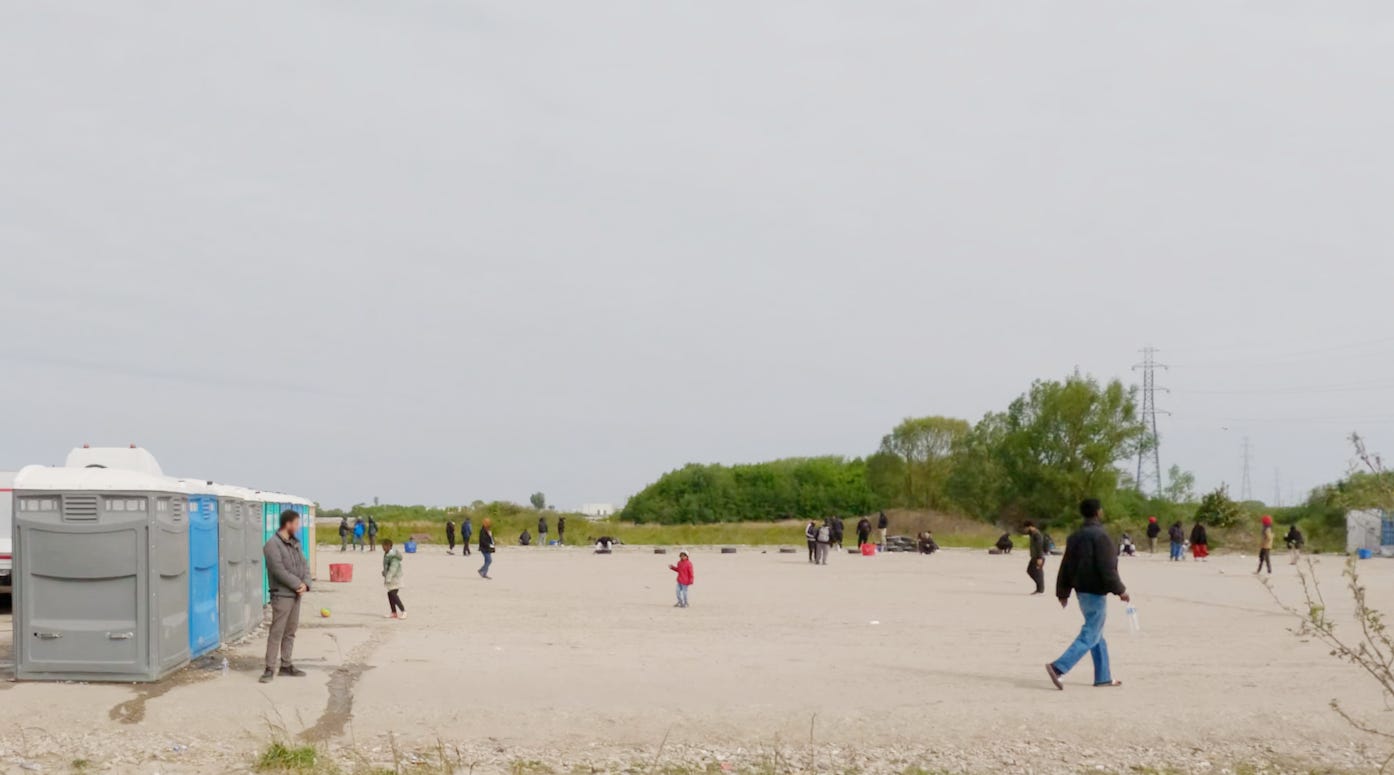
The district council - the “prefecture” - prefer to call these evictions “sheltering operations”. It sounds more humane after all. They justify this by the fact that they lay on buses to take people to reception centres (CAES) that are, intentionally, far from the coast. When you are received at a CAES you can stay for up to 1 month to see if you can claim asylum. This is a farce because everyone knows that most ‘people on the move’ in Calais and Dunkirk are there for one reason only: to attempt to cross to the UK.
In November 2025 the UK government published their policy paper on their asylum and returns policy. The Home Secretary writes,
“Many now ‘asylum shop’ their way across the continent, in search of the most attractive place to seek refuge”
This language that would be more fitting for people looking for a good deal on a package holiday is so divorced from reality. It trivialises the really desperate situations ‘people on the move’ are fleeing from. She goes on to state
We have become the destination of choice in Europe, clearly visible to every people smuggler and would-be illegal migrant across the world.
She outlines what she determines are the “pull factors” :
First, the generosity of refugee protection in the UK compared to other countries. Second, the extent of the support provided to asylum seekers, including accommodation, while people await a decision on their claim. Third, the ease with which people are entering the illegal economy in the UK, thereby sustaining a life here without a legal right to live or work.
None of these are “pull factors” I have heard when I’ve been on the ground in northern France talking to ‘people on the move’ and the humanitarian groups who provide them with vital support.
There are many reasons why people fleeing their country want to try to get to the UK. Family and cultural ties are a strong draw, for example. But one reason is the simple fact that they are not able to claim asylum in France or Europe. It is an irony of Brexit, a campaign fought on an anti-immigration platform with the promise to take back control of our borders, that it has had the opposite effect. Brexit took us out of The Dublin Agreement, which means if you are denied asylum in one EU country you cannot apply in another. The asylum process is precarious and inconsistent across the European Union and in the UK, evidenced by the fact that failed claims are often reversed on appeal. Your chances of success depend on your nationality, your legal representation, the country hearing your claim and what evidence you can present. If you are unsuccessful in the European Union, crossing that 31km of water between France and the UK gives you hope and a second chance.
The observers told me they have recently noticed a rise in the numbers of German speaking Syrians in Calais and Dunkirk. The loquacious police officer - you will meet him later in this story - made mention of the fact that many in the camps speak German. This uptick correlates to a change in German policy. Since regime change, Germany has deemed Syria a safe country and are now planning to return Syrians. Despite this designation of Syria being a ‘safe country’, it remains hostile and dangerous to some, and so they find themselves with nowehere to go, except perhaps the UK.
In her report The Home Secretary says
We are aware that the nature of accommodation, as well as its provision, can be a pull factor.
I have never once heard someone who was planning to cross the channel say that they were coming because they will get to stay in a hotel and be given £9.95 per week to live off. What I have heard many times is that they are looking for somewhere where they can finally feel safe and build a new life. I have heard them say that we have a good human rights record.
If we follow the Home Secretary’s logic that we need to address the pull factors then she should be adding re-entering the European Union to her list. But with Brexit too divisive a topic, that is conveniently ignored. Also ignoring this fact is the architect of Brexit himself, Nigel Farage, who continues to campaign hard on his anti-immigration soap box.
I met up with two Human Rights Observers very early on a Tuesday morning on a deserted street in Calais. Our destination was Dunkirk. On our trip we passed through swathes of open land that had previously been wooded. The trees had mostly been cut down, so they would no longer be attractive spaces to pitch up a tent. Wooded areas afford some level of privacy and protection from the wind and rain for ‘people on the move’. Cutting down trees and churning up the ground has become a widely used tactic. I saw walls and fences everywhere. They showed me a concrete wall that had been built in the winter at the British tax payers expense.
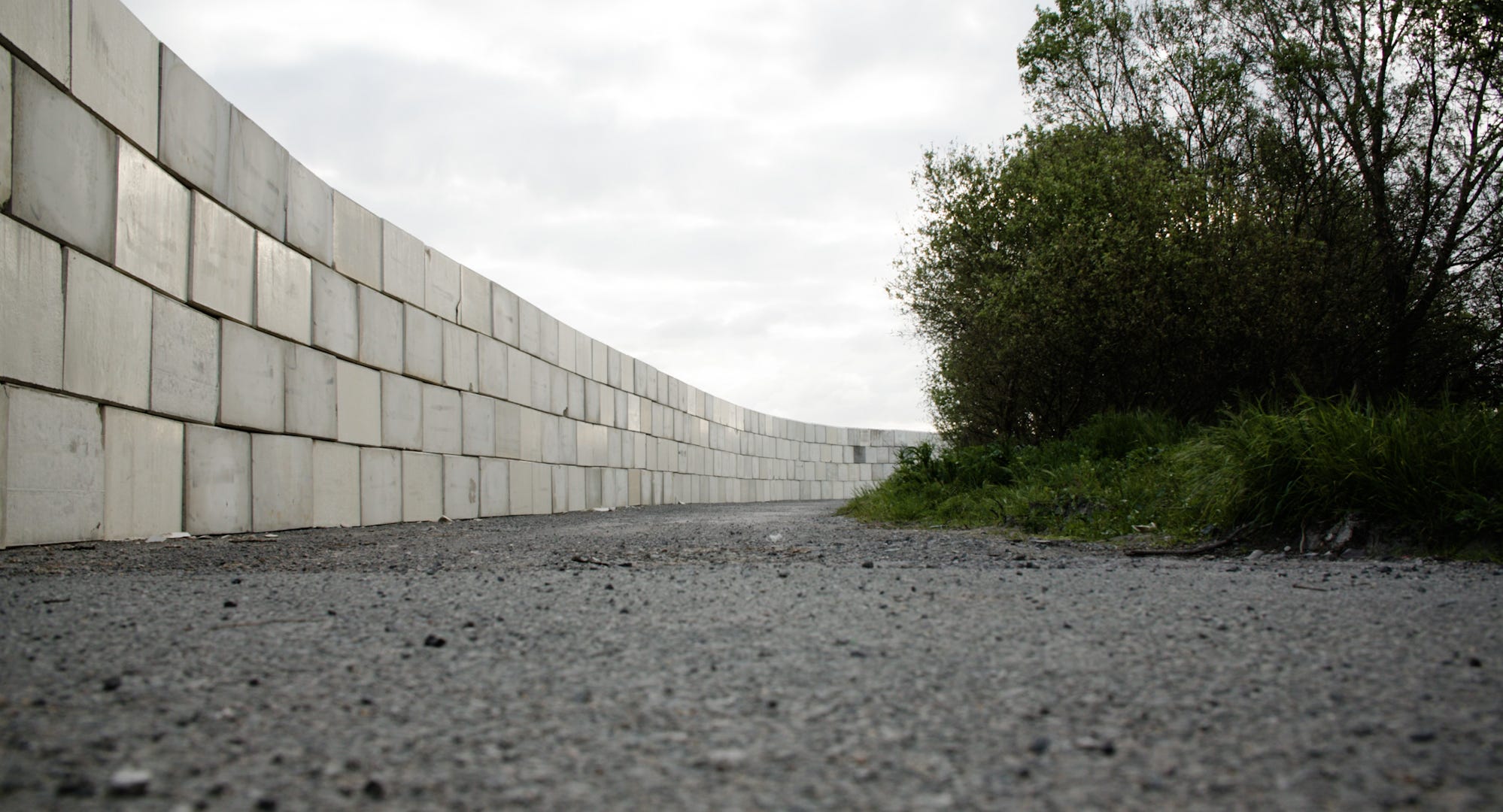
We sped along the roads chatting about the situation. The landscape industrial and uninviting. Along one road we passed “the shops”, a set of informal shacks put up to sell goods to ‘people on the move’. Suddenly my companions launched into a volley of French-accented expletives: A large convoy of police vans and white vans were sweeping past us in the other direction. Today was going to be another eviction day.
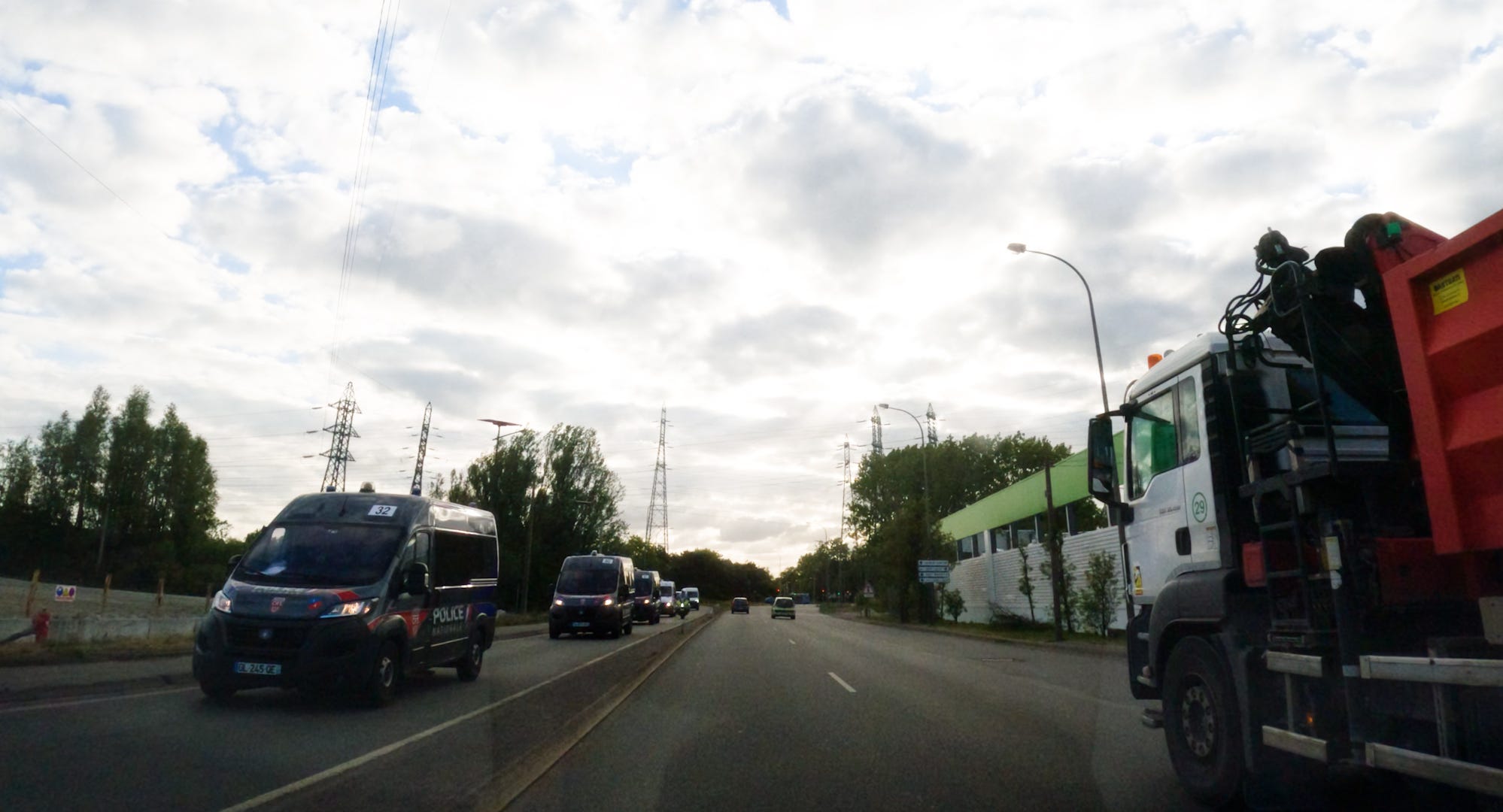
An eviction team can comprise of CRS police (the scary ones in France who have big guns), some local police, border force police (PAF), and “cleaning teams”. There are also representatives from Afeji, a state funded organisation with a mission to support vulnerable people.
As we approached a site that had just been evicted we happened across a family of six stranded in a grassy area near an informal living site. With them was a single shopping trolley stuffed full of their belongings. Take a moment to try and imagine fitting your life for your family of six in a single shopping trolley. The children looked to be between 5 and 12 years old. Three of the children were sat quietly next to the trolley while the parents spoke to us with the help of their eldest son who acted as translator. His English was remarkably good for a child of that age, and with it came an enormous burden to be a support line for his family.
The police told us that when they arrive in the camps they tell the people they can take their things with them, including their tents. The story the boy and his parents recounted was quite different. Here is the transcript from our conversation with them.
HRO: When the police came they say wake up, leave! And if you say I keep my tent, they said no?
Boy: Pistol
Father: [They say] No
HRO: They said pistol?
Father: Yeah. Woah! Woah! Woah! (gesticulating that the police were shooing them away)
Mother: Go! Go! Nicht gut. No good.
Me: No time to keep your tent? And they had a gun?
Father: Yeah. Hur! Hur!
A slashing noise comes from the mother’s mouth as she mimics slashing with her hands.
Me: They slashed your tent?
Mother and Father: Yeah.
…
Boy: [They said] when you no wake up, we will kill you, like, with a pistol.
Me: And they speak in English to you?
Boy: Yeah. And also when [they] speak in French like really loud.
…
Boy: [The police] stayed here like 30 minutes. When nobody goes, the police say, go! Go! And, that man said no, the police, make you like this big pistol.
[HRO] I’m sorry you have had to see this.
[Boy] And they killed one chicken.
[HRO & me] They took your chicken?
[Boy] They killed chicken.
[HRO & me] They killed your chicken!
I asked the family how long they had been in Dunkirk and they said 2 months. I did not ask where they were from, but given that the mother used the words “nicht gut”, I wonder whether they may be one of those Syrian families from Germany now in search of a new safe haven.

After giving them some advice as to where they could get a new family tent, we moved onto another living site that was being evicted. The police had created a perimeter around the site and we watched on as the “cleaning team” systematically removed tent after tent, dragging each one along the floor, piling them up.
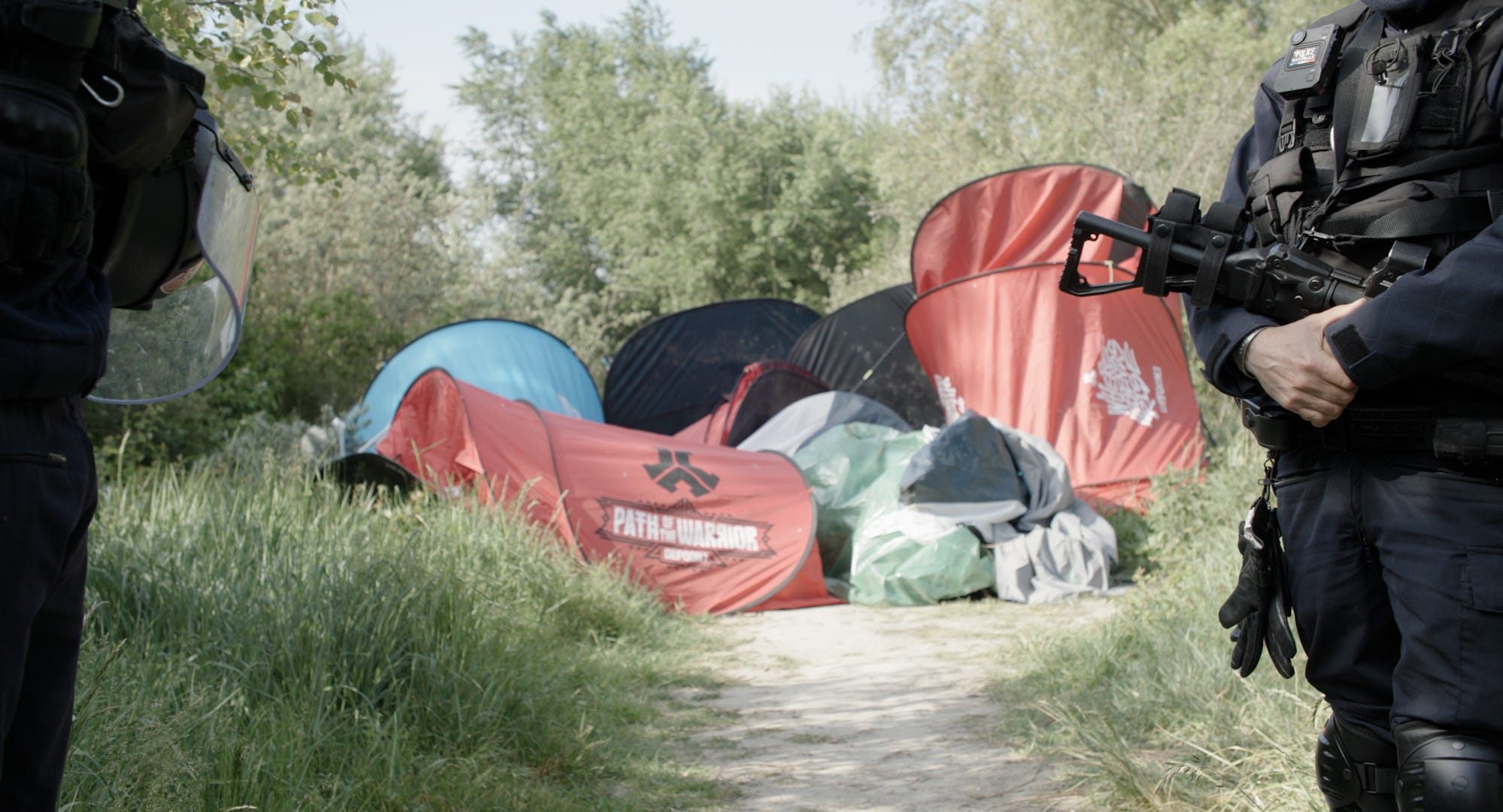
With the site evicted and the tents removed, the police and cleaning team left, taking the tents with them. ‘People on the move’ then returned to the site to rifle through what was left.
On this site, while the CRS and the cleaning team had left, some local police remained. The ‘people on the move’ were allowed back in. In a refreshingly frank conversation with a loquacious local police officer we found common ground in the absurdity of the circus we were witnessing. Every week they remove the tents from these sites, often damaging them in the process. The Afeji - a state funded organisation - then mend the tents that have been removed and damaged by the state funded police and cleaning teams. They then give the reconditioned tents back to ‘people on the move’, only to take them away again in the next eviction. The Afeji doesn’t give out tents on eviction days, so if you are not lucky enough to get a new tent from one of the humanitarian organisations you are going to end up spending that night under the stars.
Here is a segment of our conversation with the police officer:
HRO: C’est un peu absurde comme politique de venir toutes les semaines de faire ca alors que les gens [reviennent]
HRO: It’s kind of absurd policy-wise to come and do this every week when people keep returning anyway.
Police Officer: Appelez ce qui nous sert de président ou qui vous voulez, parce qu’on ne fait pas le même boulot, on ne pense pas la même chose, c’est toujours le même cirque.
Police Officer: Call whoever it is that serves as our president, or whoever you want, because he is not doing the same job as us, he doesn’t think the same thing, it’s always the same circus.
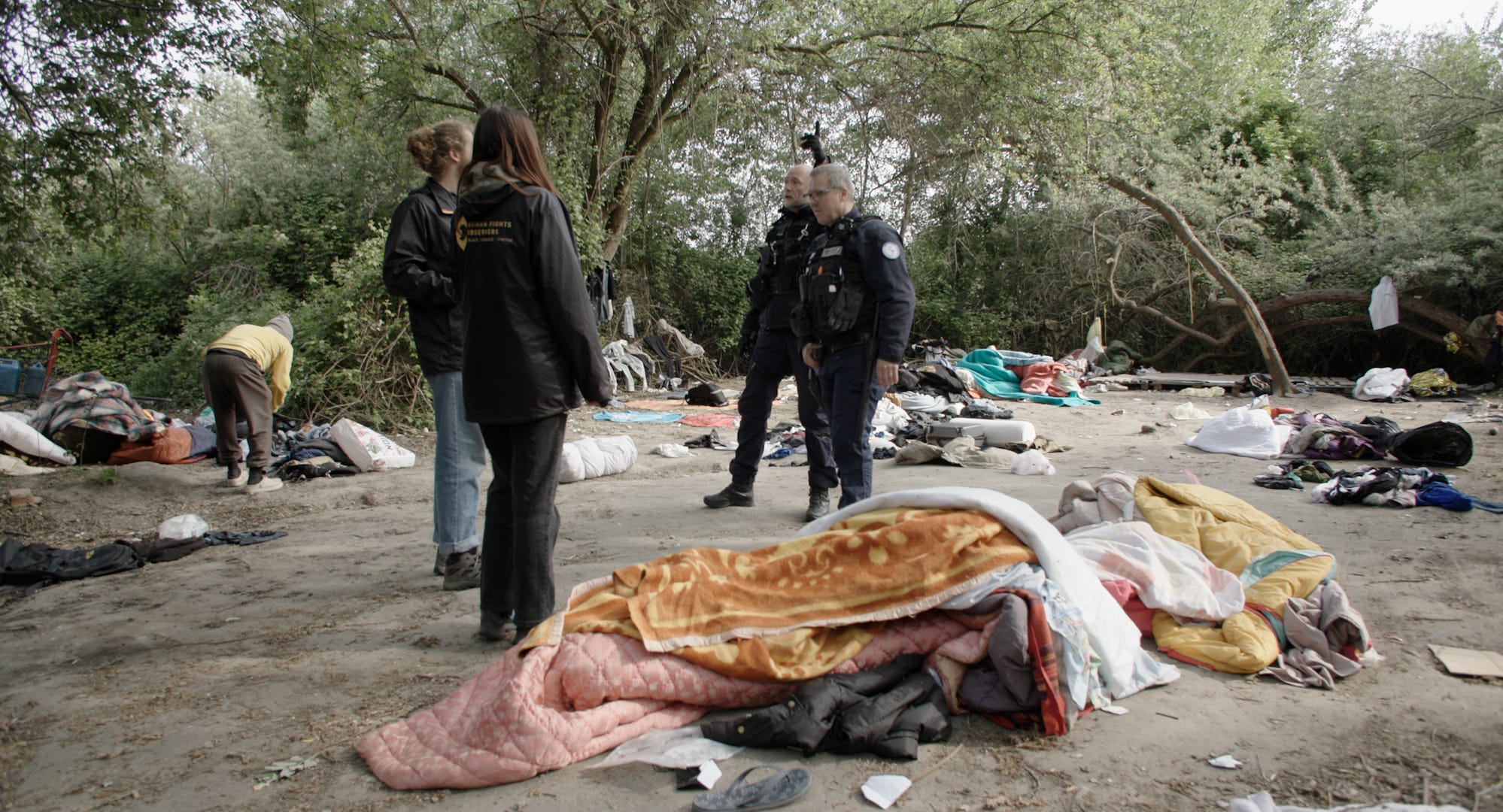
Image: Human Rights Observers talking with the local police immediately after an eviction, while a man searches for his belongings. The tents have been removed by “the cleaning team” and the remaining items have been left scattered.
As I said at the beginning of this piece, what I was witnessing was not only inhumane, but also totally and utterly pointless.
About a quarter of the £662 million is to be performance related. A chunk of it has been assigned to building and servicing a “removal centre”. The focus is for the detention and deportation of people from the 10 countries whose nationals top the list of people who try to cross the channel in small boats. They are people from Eritrea, Afghanistan, Iran, Sudan, Somalia, Ethiopia, Iraq, Syria, Vietnam and Yemen. While asylum grant rates for Afghans and Syrians has decreased recently, most of these countries have traditionally been places of origin with high acceptance rates. It follows that if these countries have high asylum acceptance rates it is because these are the people most in need of asylum. So in another cruel twist, the UK government appears to be incentivising the French to deter the people who are most in need of asylum.
With these deterrence measures the government is treating the symptom not the cause. These measures are not stopping people from attempting to cross the channel using an ‘irregular routes’. These measures just make it more dangerous for them. Just prior to my arrival in Dunkirk two young Sudanese women had suffocated to death on a small boat. It was packed full with more than 80 people. The smugglers only get paid when someone successfully makes it to the UK. Previously boats would typically have 40 to 50 people on them, but as more boats are now being intercepted by the French, to keep up their success rate, the smugglers are now cramming more people into each boat.
These deterrence measures are not going to stop the gangs either, they are just creating a very lucrative income stream for them.
I am left wondering what the outcome would have been if we had chosen to put the £662 million, the £700 million we wasted on the Rwanda scheme, the millions spent on deterrence since the first Le Touquet Agreement, into treating the cause rather than the symptom? And if you can indulge me in a brief moment of utopic thinking, what would happen if we were to stop spending trillions on warfare and put that money into welfare instead? Maybe then no one would need to cross the channel in a small boat, maybe no one would be left in a situation where the only place they could turn to is a people smuggler who sees an opportunity to profit from their misfortune.
The Dunkirk filming was for my next feature documentary Nowhere To Go. It is planned for cinema release in spring 2027. In September we will be running fundraising events in London and Manchester where I will be showing preview clips from the film and taking part in a discussion panel. If you are interested in coming to one of these events please drop us a note at info@page75productions.com
This week both The Line We Crossed and The Conspiracists have London cinema screenings.
The Line We Crossed will be showing at BLOC cinema in Bethnal Green on Wednesday, 27 May at 5 PM. It will be followed by a panel discussion organised by Queen Mary University London. The panel includes Angela Sherwood, Jeremy Corbyn, Paddy Friend, Rosa Hicks and myself. Tickets.
If you missed the opening week of the London screenings of The Conspiracists in April, there’s another opportunity to watch it at the wonderful (and air-conditioned) Bertha DocHouse this Saturday 30th May at 14:00. Tickets.
To keep up to date with other screenings of The Line We Crossed, or to find out how to stream it you can visit linktr.ee/thelinewecrossed.
We will soon be adding more screenings of The Conspiracists to the schedule. Keep up to date on linktr.ee/theconspiracists.
The London Conversations week of screenings of The Conspiracists generated some interesting articles about the film. Hardeep Matharu wrote an in depth piece in The ByLine Times. Marina Cantacuzino of The Forgiveness Project has just published an article about it on her Substack. And Noelle Cook and I were interviewed on BBC Radio for The World Tonight and The World Service.