

In June I took myself off on an ‘editing retreat’ to my haven in South West France. I needed time and deep thinking space to be able to crack the rough edit of Nowhere To Go. In our digitally-driven distracted world it felt like a luxury to be able to do that. And after this summer’s relentless heatwaves it is becoming abundantly clear that we’re entering into a new luxury economy, no longer symbolised by fast cars and handbags, but of simpler things we once took for granted: cool spaces, food, water... In the UK this harsh new reality stared us in the face this summer when we walked into the supermarket and the refrigerators had stopped working. When I was back in London in July I found myself annoyed that my local supermarket had replaced the salad section with canned drinks. On enquiry as to where the hell they had moved it to, I discovered it hadn’t been moved at all. It did not exist. There was no salad.
My editing retreat was a sweaty one. No I wasn’t indulging in hot yoga, I was just tapping keys on a computer. It was 41 degrees outside for many of the days I was there. I am back there again now, this time on holiday. On my return I discovered that my attempt to re-wild part of the garden had ended up with plants so dry they look charred. 120km away the worst ever recorded wildfires in France are burning.
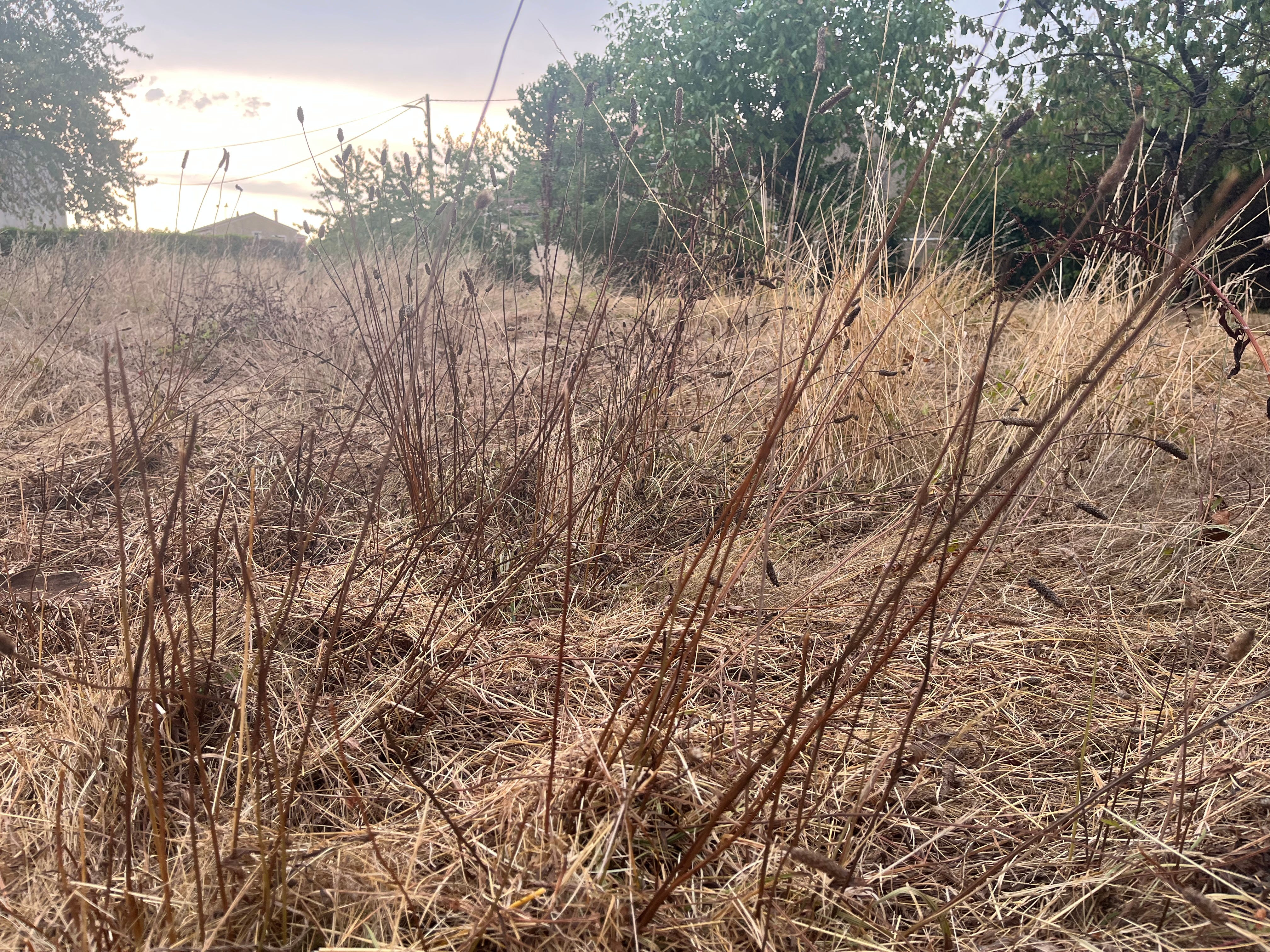
My attempt at re-wilding the garden
And yet, as this catastrophe stares us in the face, a large swathe of humans think it is a good idea to roll back on our net zero pledges and keep drilling in the North Sea. The reason often cited for this is energy security and jobs. The relative tea cup’s worth of fossil fuels we’ll get from Rosebank and Jackdaw aren’t going to give us energy security. How about we just keep it in the ground and focus our political energy on finding other ways to power the UK and support those who might lose their jobs as we transition?
While I retreated into a quiet space, the world of UK protest rights, the climate emergency, digital tech and asylum seeking - areas my work covers - have been anything but quiet.
The battle as to whether Palestine Action should have been proscribed or not continues. The “they-are-terrorists, no-they’re-not, yes-they-are” debacle now finds itself on the way to the Supreme Court for judgment in November. Meanwhile, more than 3,500 arrests have been made for terrorism in what has become one of the largest acts of civil disobedience in the UK. Their crime: quietly holding a sign with the words, “I oppose genocide, I support Palestine Action”. As Requiem For Protest shows, it is blindingly obvious that these peaceful protesters are not terrorists and it is a massive waste of police and court resources arresting them.
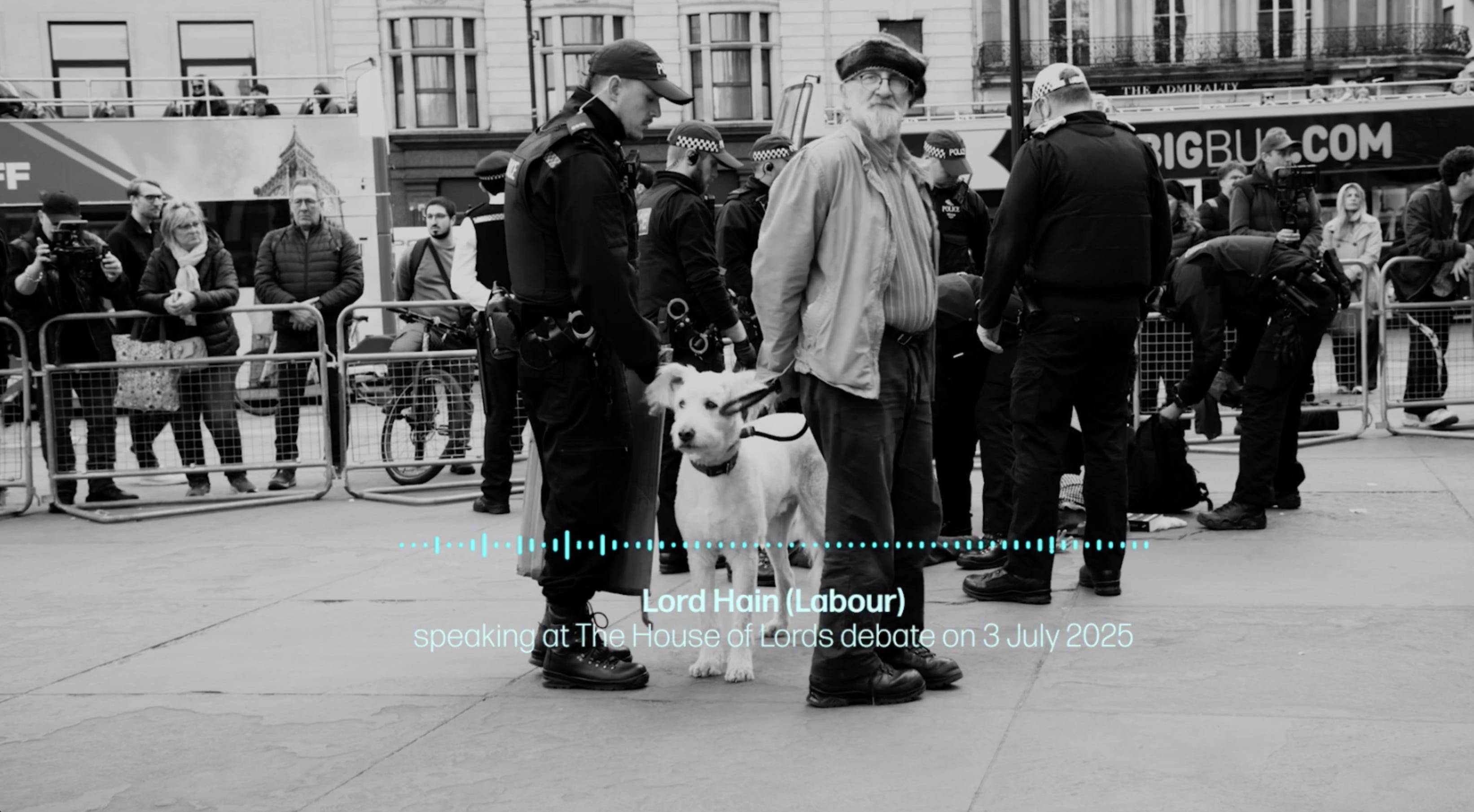
Image: Requiem For Protest Installation
The sentencing of four Palestine Action activists in June to include a “terrorist connection” was chilling. Being tried and found guilty for one crime, but sentenced under the guidelines of a different crime - a more serious one - is dystopia. The jury of their peers who passed the verdict were unaware they would be sentenced with a “terrorist connection”. Would that have changed their verdict? We cannot know, but it does throw up an important moral question. Their sentencing with a terror connection is however perfectly legal. Since the early noughties the legal framework allowing this to happen has been being put in place. Andy Meinke explains this in this article in Freedom. I was talking to a Greenham Common activist I met in Manchester and I asked her about how this compared to those times. She remarked that the difference now is there is the legal framework in place to enable the state to crack down on non-violent protest. This just underlines how important it is to campaign for the repeal of the anti-protest laws if we want to keep our democracy intact. God forbid how those laws might be used if we get a far right government next.
There is an uncomfortable truth in the sentencing of these four young Palestine Action activists: had they smashed up the property in a mindless act of hooliganism, the judge would not have been able to make the terrorism connection. They would have been out on parole a lot sooner and without the 15 years of onerous reporting requirements that come with a terrorism sentence. It was precisely their stated mission to save lives that opened up this door to a harsher punishment.
We’ve heard many cries since the proscription of Palestine Action that The Suffragettes and the Trident Ploughshare activists would also have been classed as terrorists today. I was fascinated to find this 26 year old article from Angie Zelter, one of the Ploughshare activists who was acquitted. These were different times. The Sheriff - the Scottish equivalent of a judge in English courts - even directed the jury to acquit. One of her reasons was that the defendants genuinely believed they were acting to prevent a greater crime. Different times indeed.
A further five Palestine Action activists face a similar fate at their sentencing this September. Their crime? Spraying red paint and ‘splintering’ some windows at a branch of Barclays. Being able to include damage to property in the definition of terrorism only became possible when the Terrorism Act was passed in 2000. That there is now little distinction between damage to property and the killing of humans is a rather telling indictment of the times we live in.
Something that has been bothering me with the recent trials of activists who engaged in civil disobedience, whether that was to raise the alarm about the climate emergency or the genocide in Gaza, is the moving of the goal posts. The punishments they might have expected to receive at the time of their actions were far less severe than at the time of their trials. Would they have taken part in those actions had they anticipated such harsh punishments, or if they had known they would be victims of the systemic abuse of remand? The goal post moving has been enabled by changes in the law so technically speaking it is legal, but is it moral? It certainly feels cruel.
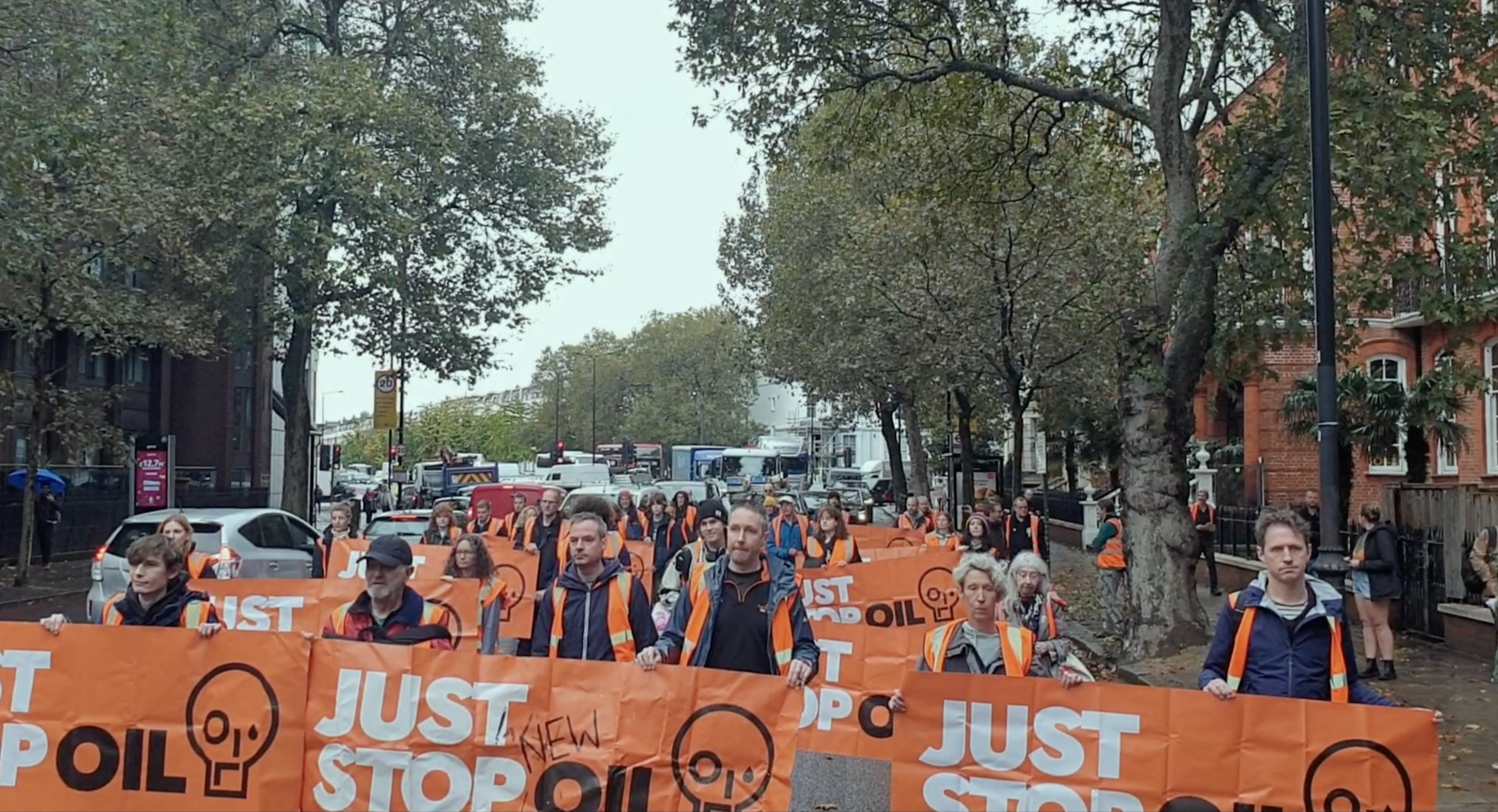
Image: The Line We Crossed - slow marchers arrested under section 7
As documented in The Line We Crossed, in 2023 hundreds of climate activists were arrested under section 7 for slow marching down major roads. Two and a half years later some are now being tried for that action. At the beginning of July, seven Just Stop Oil supporters were found not guilty for the Waterloo Bridge slow march. They are the second group now to be acquitted for this same action. I have been told by a court supporter that the jury were outraged that this was even brought to court and thought it a tremendous waste of money. The trial lasted a week. Only 16 people have been tried for this so far, hundreds more await their turn. And, because the courts are overwhelmed, most of the remaining trials aren’t scheduled until 2027 or 2028. One way of reducing the backlog would be to throw out pointless cases like these.
Incidentally, none of the mainstream press who revelled in reporting how annoying these climate activists were when they did their action thought it worth reporting their acquittals. Perhaps, as they were sweltering at their desks, the thought went through their minds that those climate campaigners had a point and it would be better to keep quiet about the fact that two successive juries have now acquitted them.
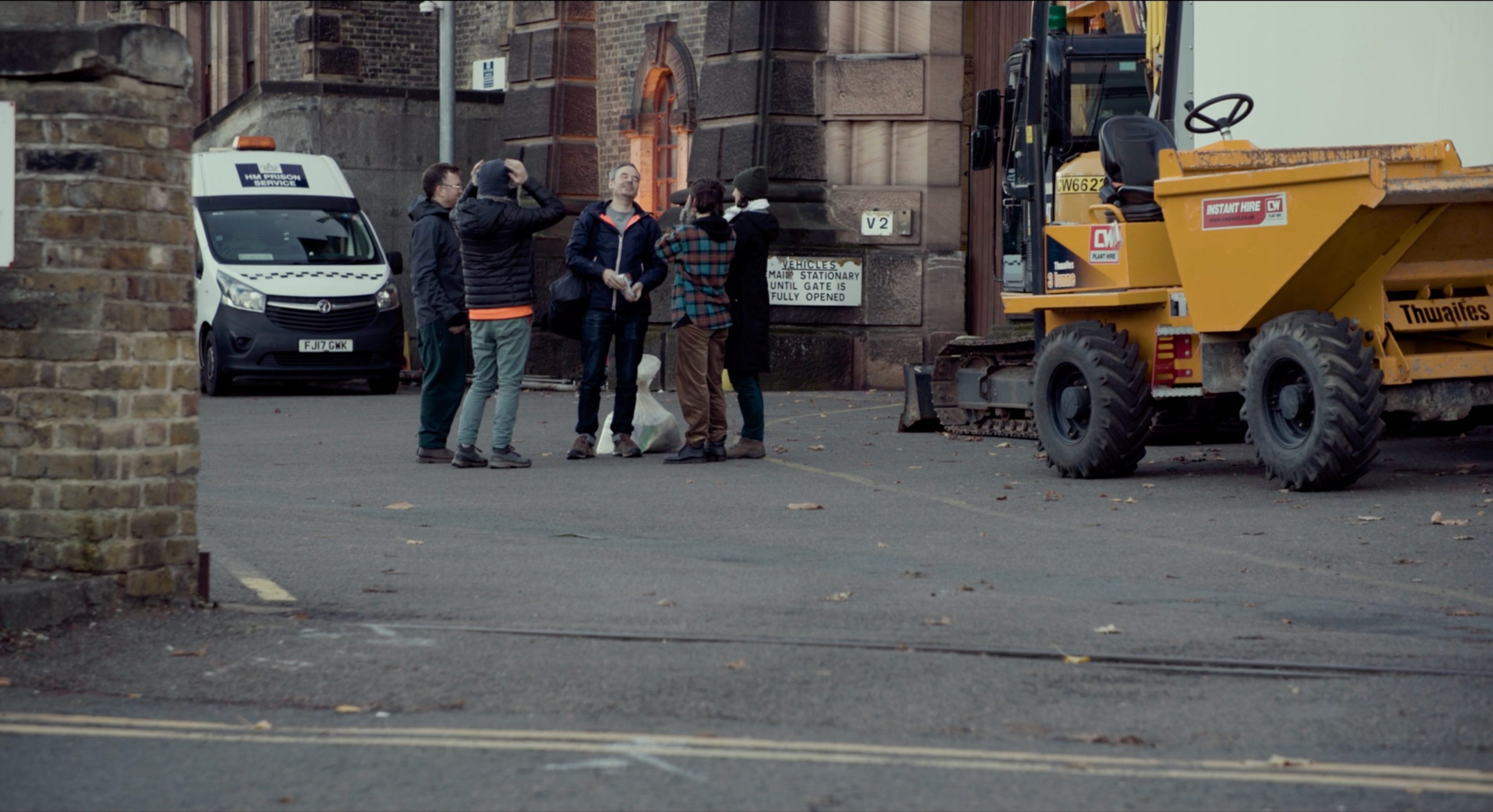
Image: The Line We Crossed - A moment of relief as Sam is released from 3 weeks on remand in Wandsworth Prison after being charged under section 7 for slow marching
And coming back to where this piece started, my film Nowhere To Go. I have been watching the news about the scenes in Ceuta this week. In Nowhere To Go we document what happened in Poland when Belarus decided to use desperate people as political pawns. They laid on charter flights to Minsk for them and actively encouraged people to pass through the Belarus / Polish border. The Belarusian border guards helped people cross by taking them to areas where the Polish border guard were less present. The guards cut the fences for them to let them through. The unfortunate ones who were found by the Polish and pushed back discovered that those same Belarusian border guards weren’t so friendly when they tried to go back. They were beaten, starved and left to try and survive in freezing temperatures. It was a political game, just as Ceuta is a political game being played by Morocco to annoy Spain. But those pawns in this political game of chess are human beings. Human beings who are driven by the hope of finding a safe place to live where they can prosper. Hope is all they have.
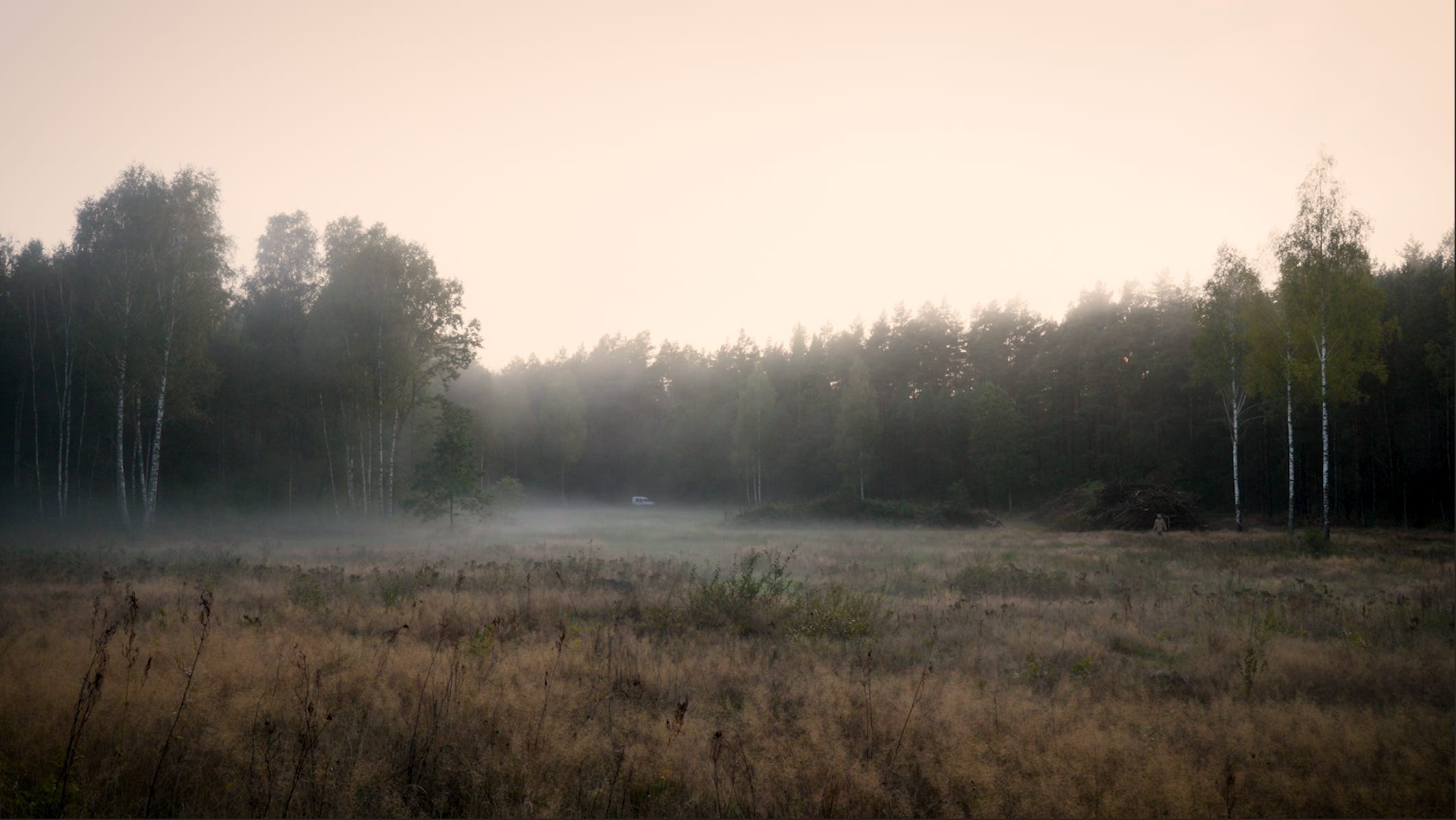
Image: Nowhere To Go - forest on the Polish Belarus border
Another recent major policy announcement was the UK ban of social media for under 16s. It has many critics, some saying it is impossible to police, others saying that it will remove a lifeline for young people who might not now be able to find supportive communities. I welcome the ban, if only because of the statement it makes. It de-legitimises it as something safe for young people. When I was researching for I Am Gen Z, my overwhelming feeling was thank heavens I am not a 15 year old girl today. I think I would have really struggled to thrive as a 15 year in the social media age. At least with the ban it will allow young people who don’t want the pressure of social media in their lives to not feel they have to be on it. When you’re the only one not on it, you are excluded, but if a bunch of you aren’t, then that problem goes away. It will also help parents who are trying to keep their kids off social media for as long as they can. One friend of mine told me when she finally allowed her daughter a smartphone with access to what’s app she was mortified when she spotted the name of the group her friends had set up: “[daughter’s name] finally gets what’s app”. She was the last in her friend group to be allowed to use it. No parent wants their child to be the excluded one. This ban may help a little.
The ban is not going to single-handedly solve the toxic effects of social media, but it is an important recognition from our government that it can be harmful. For those of you who have been able to come to screenings of The Conspiracists, you may also agree with me that it should be banned from conspiracy theorists too!
Image: The Conspiracists - dead bug at the truck stop
We’re not going to solve the energy crisis, and the linked cost of living crisis, by drilling another tea cup of fossil fuel out of the North Sea. We’re not going to “smash the gangs” or “stop the boats” by putting harsher and harsher deterrents in place. We’re not going to eradicate the dangers of social media by banning it for under 16s. We’re very busy treating symptoms not the causes, obstinately looking the other way while the world burns (literally and metaphorically). The only way we are going to get to energy security is through clean energy we can control. The only way we will smash the gangs and stop the boats is by putting our money and effort into making life viable for people so they don’t need to leave their home countries in the first place, and by providing safe and legal routes for those who are left with no other choice. The only way we will remove the toxic effects of social media is by making the people who design and run those platforms accountable. And under-pinning all those efforts is an overwhelming need to act on the climate emergency. Now. Not tomorrow. Yesterday. Otherwise we are set to lose a hell of a lot more than salad.
In July we premiered our installation Requiem For Protest at Friend’s Meeting House in Manchester. A big shout out to Steve, Kevin, Mary, Liz and the team at the Manchester Quakers who have given me so much support and helped make it happen. We are now actively seeking other venues and community groups to host the installation. Please spread the word! Find out more on the website.
Simultaneously we kicked off our completion fundraiser for Nowhere To Go. We need to raise £30,000 by the end of the year if we are to be ready for a Spring 2027 release. We’ve got off to a strong start and I am super energised by the support. Everyone who donates gets a thank you in the end credits. Personally I want that to be a very long list as that will make a big statement in its own right. Click here to go to the donation page and please tell everyone about it!
On 26 October we are going to parliament! Clive Lewis MP is sponsoring a screening event for the The Line We Crossed. This presents an incredible opportunity to advocate for policy change on protest rights and the climate emergency. If you want your MP to attend get in touch, and together let’s see if we can get them to commit to come along. The format will be clips followed by panel discussions. Each panel will include a participant in the film.
Thank you Liz for this great article. I am reading with interest and concern about these policies which deem non-violent protestors to be “terrorists.” Besides our two countries sharing a common language (mostly! 😊) we share the rising dangers of threats to maintaining free speech, free press, right to peaceably assemble, etc etc. Keep the documentaries and the newsletters coming. Knowledge is power.
- Deanne Larsen
Liz - great piece. Can’t see a single thing to disagree with. Hopefully a change in direction will come. Be well. Marc